 Spanish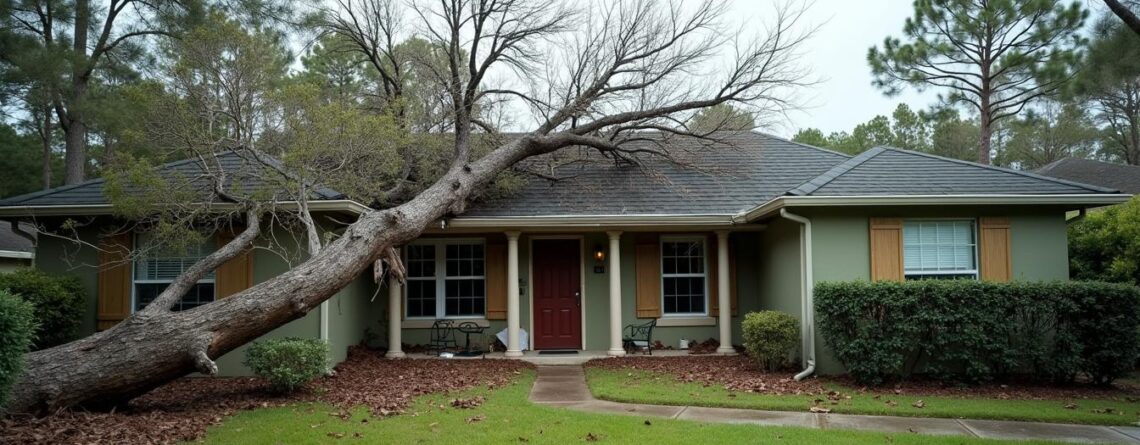
Storm Damage Restoration in Orlando: A Homeowner’s Guide to Recovery
When a storm rolls through Central Florida, the hours that follow can feel overwhelming. Water is where it shouldn’t be, a tree may be resting against your roof, and you are trying to figure out who to call first. At Going Green Restoration USA, we have walked Orlando homeowners through this exact moment since 2014. We are a veteran-owned, IICRC-certified team, and we are here around the clock to help you stabilize your property and begin the road back to normal. This guide explains the kinds of storm damage we see across our area, the safety steps to take right away, how professional storm damage restoration actually works, and how to approach the insurance side with a clear head.
What Kinds of Storm Damage Do Florida Homes Face?
Florida weather is uniquely demanding, and storm damage restoration here has to account for a range of forces that often strike a home all at once. Orlando sits inland, but hurricane season still brings heavy rain, high wind, and the flooding that follows, so no property in Altamonte Springs, Apopka, or Windermere is fully out of reach of a serious storm.
The most common types of storm damage we respond to include:
- Hurricane damage — the combined impact of wind, rain, and debris during named storms, which can affect a home from roof to foundation in a matter of hours.
- Flooding — rising water and stormwater intrusion that saturates flooring, drywall, and belongings, often carrying contaminants indoors.
- Wind damage — torn shingles, lifted roofing, broken windows, and damaged siding that expose the interior to the elements.
- Fallen trees and limbs — heavy branches or whole trees that puncture roofs, crush structures, or block safe access to the home.
- Roof leaks — smaller breaches that let water seep into attics, ceilings, and wall cavities, where it can quietly cause damage long after the sky clears.
Because these problems frequently overlap, treating only the visible damage is rarely enough to protect a home over the long term.
What Should Homeowners Do Immediately After a Storm?
Your safety always comes before your property, and no possession is worth risking injury to recover. Before you assess any damage, take a breath and move deliberately through a few essential steps.
- Stay clear of hazards. Avoid downed power lines, standing water that may be electrified, and any part of the structure that looks unstable.
- Wait for the all-clear. Do not re-enter a heavily damaged home until it has been deemed safe, and follow guidance from local authorities.
- Shut off utilities if it is safe. Turning off electricity and water can prevent further damage and reduce risk.
- Document what you see. Take photos and videos of the damage from a safe distance before anything is moved or cleaned up.
- Prevent further loss where you safely can. Move valuables to dry areas and place buckets under active leaks, but leave major work to professionals.
For a fuller checklist on preparing for and recovering from severe weather, FEMA’s Ready.gov offers trusted, plain-language guidance for families. If you are facing a water damage emergency in your home, our team is only a phone call away.
How Does the Storm Damage Restoration Process Work?
A thorough restoration follows a clear sequence, because skipping steps is how hidden moisture turns into bigger problems down the road. When you reach out to us, we move through a proven process designed to stabilize your home first and rebuild it fully second.
- Assessment. We inspect the property from top to bottom, identifying visible damage and using moisture readings to find water that has traveled into walls, ceilings, and subfloors.
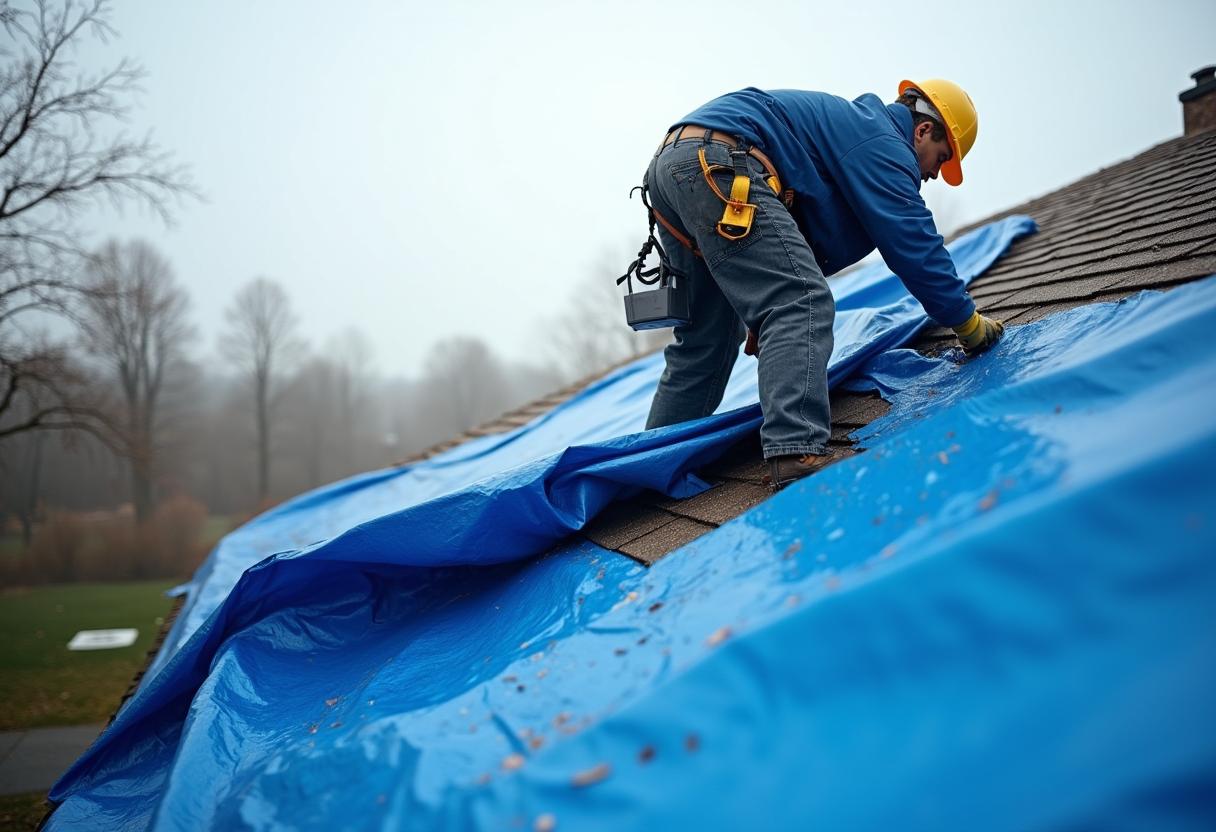
- Tarping and board-up. We cover exposed roofing and secure broken windows or openings to keep out rain, wind, and intruders while repairs are planned.
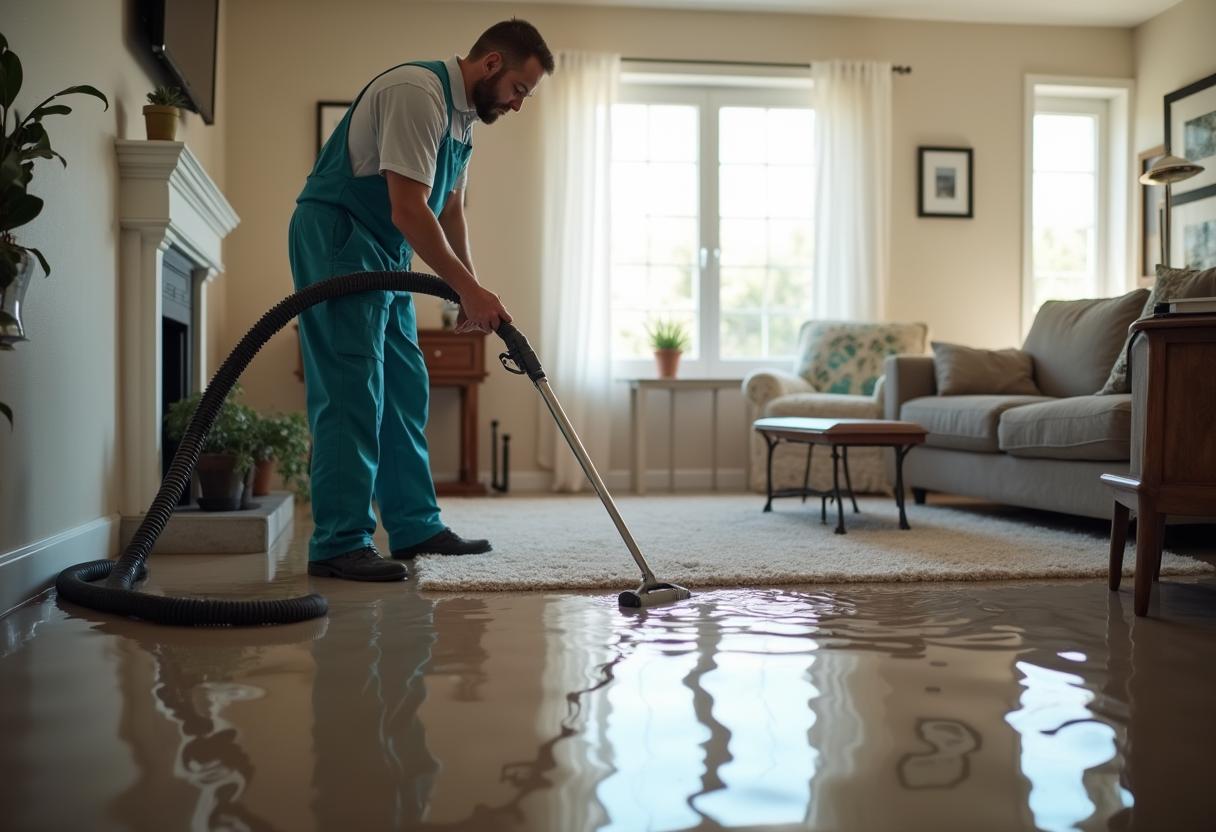
- Water removal. We extract standing water quickly, since the longer moisture lingers, the greater the risk to your structure and belongings.
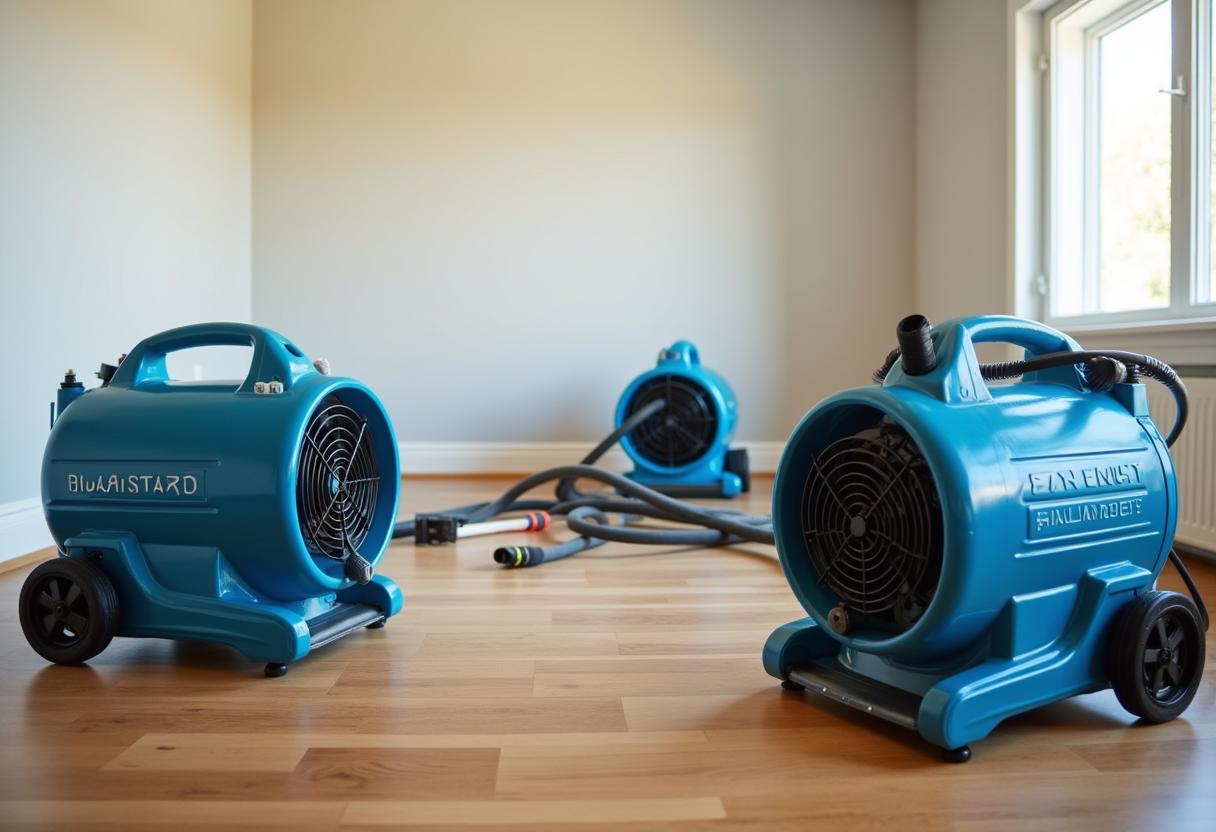
- Drying and dehumidification. We set up professional air movers and dehumidifiers, then monitor moisture levels until the affected areas are fully dry.
- Repairs and reconstruction. We handle the rebuild, from replacing drywall and flooring to larger structural reconstruction, so your home is restored to its pre-storm condition.
Handling this sequence correctly is the difference between a home that is merely dried out and one that is truly restored.
Why Does Moisture Deserve Special Attention in Central Florida?
In our humid climate, lingering moisture is one of the most persistent threats a storm can leave behind. Florida’s warmth and humidity create ideal conditions for mold to develop, sometimes within a day or two of water intrusion, which is why fast, complete water damage restoration matters so much.
This is where professional equipment and training earn their keep. Our IICRC-certified technicians know that surfaces can feel dry to the touch while wall cavities and subfloors remain saturated, and we do not consider a job finished until the numbers confirm it. If you want to understand the health and property risks of indoor moisture, the U.S. EPA’s guide to mold is a reliable resource. When drying is done right the first time, homeowners avoid the far more costly problem of mold removal weeks later.
How Should Homeowners Work With Their Insurance?
Filing a storm damage claim can feel like a second storm all its own, but a calm, organized approach makes a real difference. General good practice is to notify your insurer promptly, keep thorough records, and hold on to receipts for any emergency measures you take. This is general guidance, not legal advice, and your policy terms and coverage will always govern what is possible.
A few habits tend to help the process go smoothly:
- Report the loss early and ask your insurer what documentation they will need.
- Keep your photos and videos organized alongside a written list of damaged items.
- Save receipts for tarps, board-up materials, and other emergency expenses.
- Ask questions about your coverage, deductibles, and timelines so there are no surprises.
We are glad to document our findings clearly and provide the detailed records that support your conversations with your insurer. Clear documentation from the very first inspection is one of the most valuable things a homeowner can have when a claim moves forward.
Why Does 24/7 Local Response Matter in Orlando?
Storm damage does not keep business hours, and neither do we. Because we are based in the Orlando area and serve communities like Altamonte Springs, Apopka, and Windermere, we can reach your property quickly when time is working against you.
That local presence matters most during hurricane season, when demand spikes and every hour counts. As a veteran-owned company operating since 2014, we bring a disciplined, mission-focused approach to every call, and our IICRC-certified team is available 24/7 to answer the phone and get to work. Fast local response is not a luxury after a storm; it is often what keeps a manageable problem from becoming a major one.
Ready When You Need Us
Recovering from a storm is a process, and you do not have to manage it alone. From the first emergency tarp to the final coat of paint, our team handles water damage restoration, mold removal, reconstruction, and storm damage restoration with care and accountability. If your home has been hit by wind, water, or fallen trees, contact Going Green Restoration or call us anytime at 407-800-9204. We will help you take the next step toward getting your home, and your peace of mind, back.
Frequently Asked Questions
How soon after a storm should I call a restoration company?
As soon as it is safe to do so. In Central Florida’s humidity, mold can begin developing within 24 to 48 hours of water intrusion, so the faster water is removed and drying begins, the more of your home you can save. Going Green Restoration answers the phone 24/7.
Does storm damage restoration include tarping and board-up?
Yes. Emergency tarping of exposed roofing and board-up of broken windows and openings is one of the first steps, protecting your home from further rain, wind, and intrusion while a full repair plan is developed.
Will you work with my insurance company?
We document our findings clearly and provide detailed records that support your conversations with your insurer. This is general guidance, not legal advice, and your policy terms and coverage always govern what is possible, but thorough documentation from the first inspection is one of the most valuable things a homeowner can have.
What areas do you serve for storm damage restoration?
We serve Orlando and surrounding Central Florida communities, including Altamonte Springs, Apopka, and Windermere, with 24/7 emergency response.
Can hidden moisture cause problems after the storm passes?
Yes. Surfaces can feel dry to the touch while wall cavities and subfloors remain saturated. Our IICRC-certified technicians use moisture readings and do not consider a job finished until the numbers confirm the structure is fully dry, which helps prevent mold weeks later.
Are you available 24/7 during hurricane season?
Yes. As a veteran-owned company operating since 2014, our IICRC-certified team is available around the clock, which matters most during hurricane season when demand spikes and every hour counts. Call 407-800-9204 anytime.
Posted on Behalf of Going Green Restoration USA