 Spanish
A Day in the Life of an Emergency Water Damage Technician
Most people in Orlando are still asleep when our phone rings. It might be 2:47 in the morning. It might be 4:15. The call is always the same in its urgency and different in its details, a pipe burst under a kitchen sink, a washing machine supply line that let go overnight, a vacation rental in the Dr. Phillips neighborhood with water seeping under every door on the first floor, a family in Windermere who woke up to six inches of standing water in their master bedroom because a toilet supply line failed silently while they slept.
Water does not wait for business hours. Neither do we.
This article is a transparent, honest look at what our team actually does, from the moment a call comes in to the moment we pack up our equipment and leave a home safer than we found it. We want Orlando homeowners, vacation property owners, and business operators to understand exactly what happens when they call us, what our technicians are thinking at every stage, and why the steps we take matter so deeply for the long-term health and safety of their properties.
Understanding our process also helps you understand why speed matters so much, and why the difference between calling us immediately and waiting until morning can cost thousands of dollars and weeks of additional recovery time.
The Call: How Every Emergency Begins
Our 24/7 emergency line is staffed by real people, not automated systems. When a homeowner calls us at three in the morning, they are already stressed, often frightened, and sometimes unsure of exactly what they are dealing with. The first job of whoever answers that call is not to dispatch equipment, it is to listen, calm, and assess.
Our intake process gathers the information our technicians need before they leave the facility: What is the source of the water? Has it been stopped or is it still actively flowing? How many rooms are affected? Is the electrical panel accessible and has power been cut to affected areas? Are there children, elderly residents, or pets in the home? Is there any visible mold or sewage involvement?
That last question matters enormously. Water damage falls into three categories recognized by the restoration industry. Category 1 is clean water from a supply line or appliance. Category 2, often called gray water, comes from sources like washing machine overflow or dishwasher discharge and carries some contamination. Category 3, or black water, involves sewage, floodwater that has contacted the ground, or any water that has been standing long enough to become biologically contaminated. Each category changes the personal protective equipment our technicians use, the products we apply, and the protocols we follow.
By the time our technician is backing the truck out of the facility, they already have a mental map of the situation. The right equipment is loaded. The right products are on board. The right safety gear is packed. We do not arrive and figure it out, we arrive ready.
Arrival: The First Ten Minutes Are Everything
Our technicians are trained to approach every job site with a deliberate sequence. The first ten minutes of an emergency response set the tone for everything that follows, and rushing that assessment phase almost always creates problems later.
Step One: Visual and Safety Assessment
Before touching anything or bringing equipment inside, our technician walks the perimeter of the affected area. We are looking for structural indicators, sagging ceilings, buckled flooring, walls that have begun to bow outward from absorbed water. We are checking for electrical hazards: outlets near standing water, visible damage to wiring, panels that may have been exposed. We are checking for gas indicators. We are looking at the ceiling above the affected area, because water migrates upward through capillary action and travels along structural members in directions that are not always obvious.
This walk-through takes five to eight minutes and it regularly reveals problems that the homeowner was not aware of. A burst pipe in a first-floor bathroom may have run water under the subfloor to the hallway ten feet away. A washing machine overflow on the second floor may have traveled through a ceiling light fixture to pool behind first-floor drywall. Water is patient and creative in ways that consistently surprise people who do not work with it every day.
Step Two: Moisture Mapping
Our technicians carry professional moisture meters and thermal imaging cameras. Moisture meters give us readings in specific materials, drywall, wood framing, concrete, flooring, and tell us the saturation level. Thermal imaging cameras reveal temperature differentials that indicate hidden moisture: a cold patch behind a warm wall, a dark stripe along a ceiling joist, a floor section that reads differently from the surrounding area because water has migrated beneath it.
We document every reading. We photograph every affected area. This documentation serves two purposes: it gives us a scientific baseline for measuring drying progress over the coming days, and it provides the objective evidence that insurance adjusters need to authorize the full scope of remediation work. Thorough moisture mapping at the outset protects the homeowner from disputes later.
Step Three: Category and Scope Determination
With the visual assessment and moisture map complete, our technician makes the formal determination of water category and damage scope. This determination drives every subsequent decision, what PPE to wear, what containment measures to establish, what products to apply, how many drying units to deploy, and what materials may need to be removed rather than dried in place.
For cases involving potential mold, sewage contamination, or Category 3 water, we immediately establish containment before proceeding further. The CDC’s guidance on water damage and mold is clear in their published resources that controlling the spread of contamination is the first priority in any remediation effort. We take that seriously.
The Middle of the Job: What Actually Happens During Restoration
This is the part that most homeowners never see in detail, what our technicians are actually doing while the equipment is running and the hours are passing.
Water Extraction
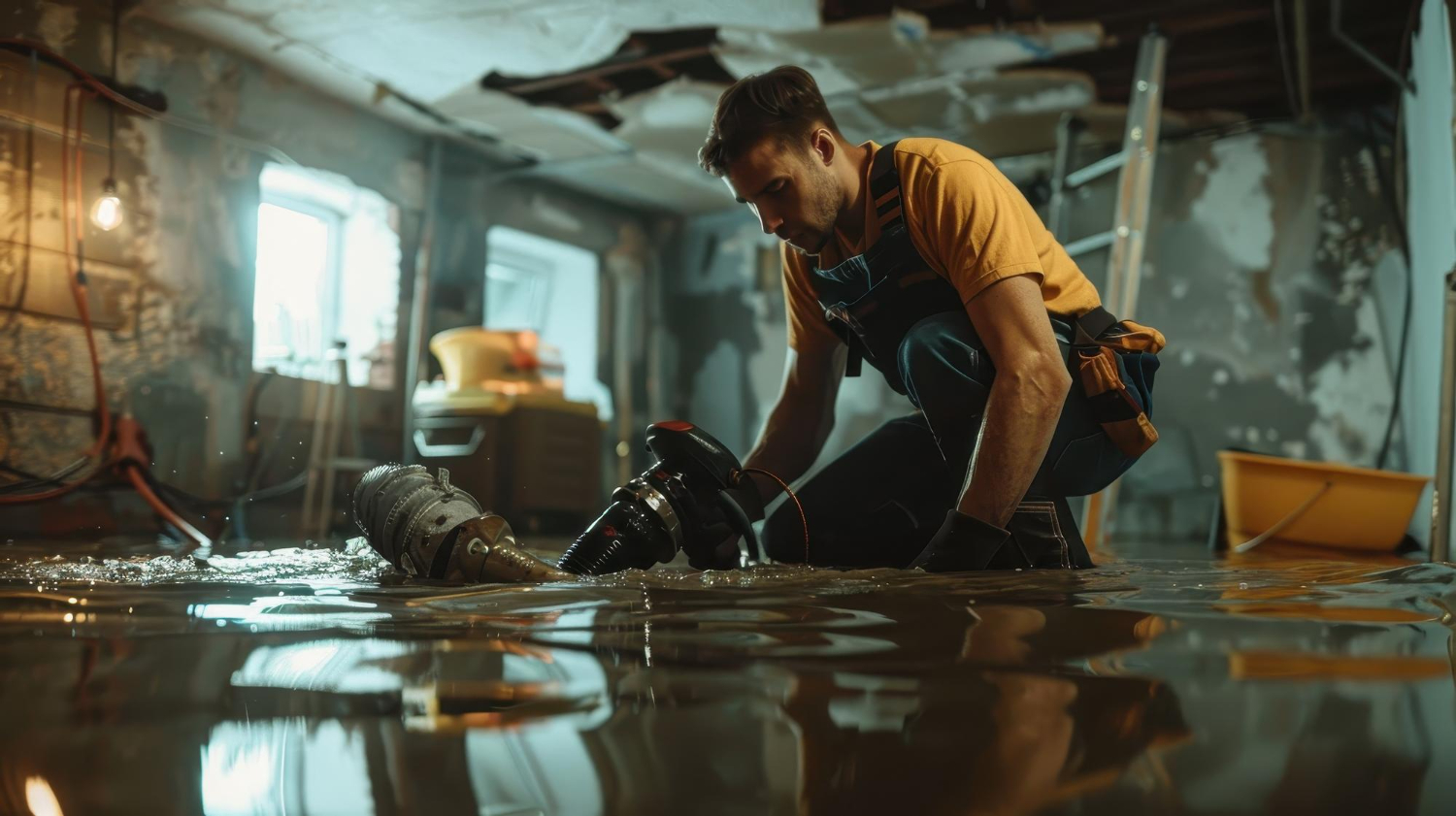
The fastest and most important thing we can do in the early hours of a water emergency is remove standing water. Our truck-mounted and portable extraction units pull hundreds of gallons per hour from flooring, carpet, and structural cavities. For hardwood floors, we use specialty extraction heads designed to draw moisture from between boards without causing the mechanical damage that standard extraction can create. For carpet and pad, we assess salvageability, in many cases, wet carpet can be saved if extracted and dried quickly, but saturated pad almost never can and is typically removed immediately.
Extraction is not glamorous work. Our technicians are on their knees, moving furniture, lifting sections of flooring, working extraction wands into tight spaces along baseboards and under cabinetry. It is physical, methodical, and absolutely foundational, because every gallon we pull out mechanically is a gallon that does not have to evaporate through the drying system, which means faster drying and lower risk of secondary mold development.
Structural Drying Setup
Once extraction is complete, our technicians set up the drying system. This is where restoration science becomes genuinely interesting. Drying a water-damaged structure is not simply a matter of pointing fans at wet surfaces. It involves creating an engineered airflow system that moves warm, dry air across wet surfaces, captures the evaporated moisture, and exhausts it from the space, all while maintaining conditions that maximize the rate of evaporation without causing differential drying that warps or damages structural materials.
Our team deploys industrial air movers, they generate a high-velocity, low-humidity airflow across wet surfaces, paired with commercial-grade dehumidifiers that pull moisture out of the air as fast as the air movers are generating it. The ratio of air movers to dehumidifiers, their placement, and the airflow patterns they create are calculated based on the square footage, the materials involved, the ambient temperature and humidity, and the readings from our initial moisture mapping.
We also deploy drying mats for hardwood floors where appropriate, specialized systems that apply controlled heat and airflow directly to the floor surface to draw moisture up from below without creating the temperature differential that causes cupping and warping.
For walls with moisture behind them, we use structural cavity drying systems, equipment that injects warm, dry air directly into wall cavities through small-diameter ports drilled at the base of the wall, allowing the space behind the drywall to dry from the inside out without requiring demolition in every case.
This is the part of our work that separates professional Orlando Water Damage Restoration from what a homeowner can accomplish with a few box fans from a hardware store. The physics of structural drying require professional-grade equipment and trained judgment to execute correctly.
Antimicrobial Treatment
Once structural surfaces are accessible and extraction is complete, we apply our eco-friendly antimicrobial treatments to all affected areas. As we described in our previous coverage of green restoration materials, we use EPA Safer Choice certified formulations, hydrogen peroxide-based and plant-derived botanical antimicrobials that inhibit mold growth without introducing toxic VOCs into the home environment.
This treatment step is not optional and not cosmetic. In Florida’s climate, with ambient humidity consistently running above 60%, the window between water intrusion and mold colonization is measured in hours, not days. The U.S. Environmental Protection Agency’s mold cleanup guidelines recognize in their published resources that mold can begin growing within 24 to 48 hours on wet materials. Our antimicrobial treatment at the time of initial response buys the drying system time to do its work without mold establishing itself in the interim.
Monitoring Visits: The Days After the Emergency Call
A common misconception about water damage restoration is that it is a single-event service, we come, we set up equipment, we leave, the problem is solved. The reality is that professional structural drying is an ongoing process that requires monitoring, adjustment, and documentation over multiple days.
Our technicians return to every active drying job typically every 24 to 48 hours. Each monitoring visit follows a consistent protocol.
Reading and Recording
Every piece of drying equipment is checked, air mover operation, dehumidifier function, water collection volumes. Every moisture reading from our initial map is retaken and compared to the baseline. We track the drying curve: the rate at which moisture readings are declining tells us whether the system is performing correctly or whether adjustments are needed.
Dehumidifiers that have collected large volumes of water overnight tell us that significant moisture is being extracted from the structure, a positive sign. Moisture readings that are not declining as expected tell us that there may be hidden moisture sources we missed in the initial assessment, or that the drying system configuration needs adjustment.
Equipment Adjustment
As materials dry, airflow patterns that were optimal on day one may become suboptimal by day three. Our technicians reposition equipment as the drying progresses, redirecting airflow to areas that are drying more slowly. Additional equipment may be added for stubborn moisture concentrations. Equipment that has completed its work in dried areas may be consolidated to focus capacity on remaining wet zones.
This ongoing adjustment is why professional restoration achieves better outcomes than leaving equipment in a fixed configuration and hoping for the best.
Communication with the Homeowner
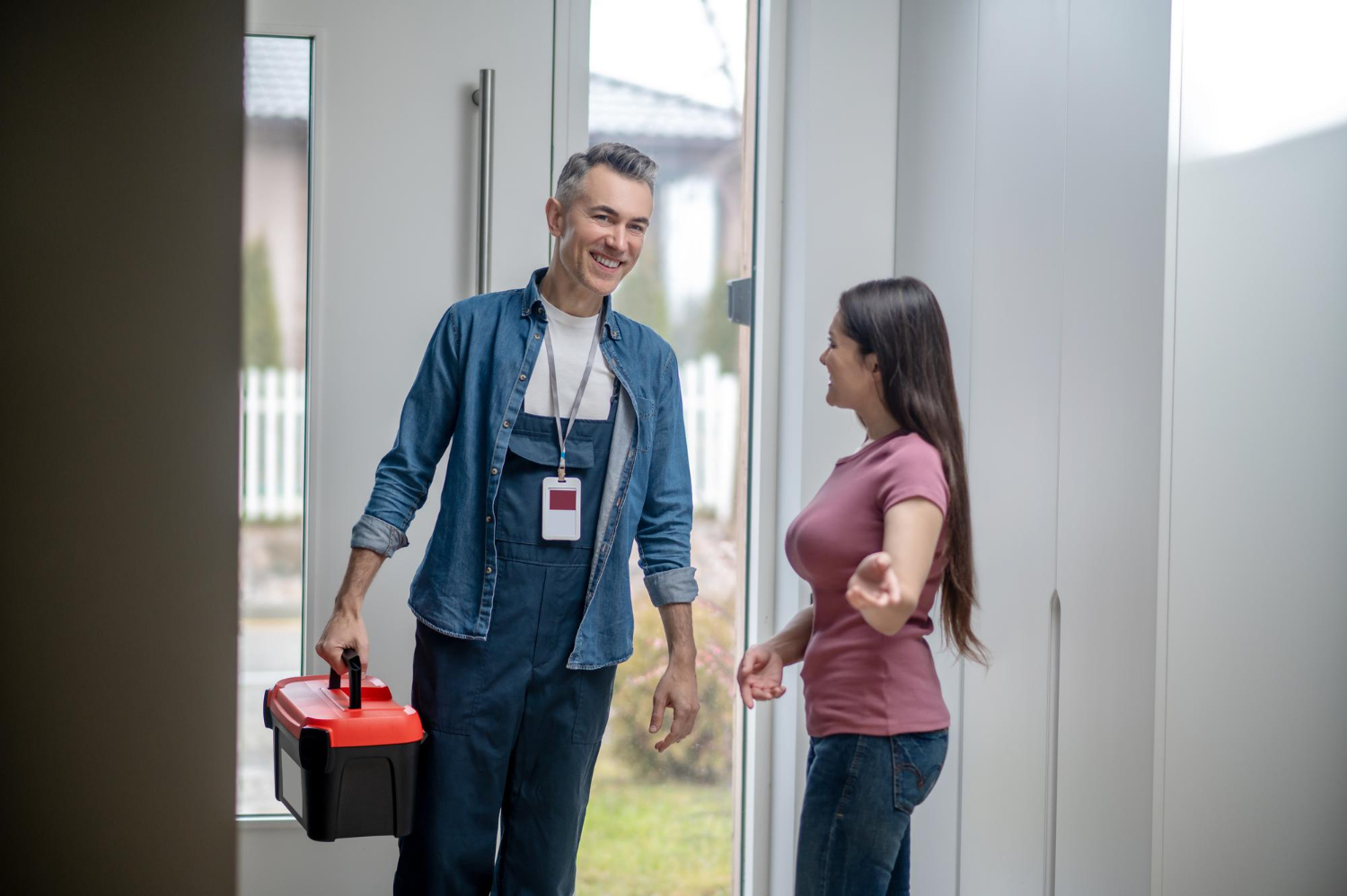
Every monitoring visit includes a direct conversation with the homeowner or their designated contact, including remote contacts for vacation property owners. We explain what the readings show, what it means for the timeline, and what to expect before our next visit. For our clients who are managing a flooded vacation property in Orlando from out of state, these communication touchpoints are particularly important. Our ability to serve as the on-the-ground eyes and ears for remote property owners is one of the most valuable things we offer as a trusted Orlando Restoration Company.
When Mold Is Part of the Picture
Not every water damage call involves active mold, but many do, particularly in Florida where properties can sit unoccupied between rental bookings or seasonal visits. When our technicians arrive at a property and find mold already present alongside water damage, the scope of the project expands significantly.
Mold remediation requires a different set of protocols layered on top of the standard water damage process. Our technicians establish negative air pressure containment using plastic sheeting and HEPA-filtered air scrubbers, creating a controlled environment that prevents mold spores from migrating to unaffected areas during the remediation work. All personnel working in the containment zone wear full respiratory protection and disposable coveralls.
Physical removal of mold-contaminated materials, drywall sections, insulation, flooring components, is performed under containment, with debris bagged and sealed before it is removed from the work area. Remaining structural surfaces are treated with our eco-certified antimicrobial formulations and allowed to dry to acceptable moisture levels before any reconstruction begins.
Our 24 Hour Mold Removal Services Orlando team is available around the clock because mold discovery is not a Monday-through-Friday event. Vacation rental guests, property managers, and homeowners call us at all hours when they find mold, and the faster our team establishes containment and begins remediation, the less the problem spreads and the lower the ultimate remediation cost.
FEMA’s disaster recovery resources, available through their flood and disaster guidance portal, consistently emphasize in their published materials that mold growth following water intrusion represents one of the most significant secondary risks to property value and occupant health in disaster recovery scenarios. Our team treats every mold discovery with the urgency their guidance implies.
The Complexity of Vacation and Rental Properties
A significant portion of our emergency calls come from vacation rental owners, property management companies, and out-of-state investors managing properties in the Orlando metro area. These situations add layers of complexity that our technicians navigate every day.
A primary residence has one set of occupants who know the property, know the location of every shutoff valve, and can provide the context our technicians need. A vacation rental may have guests in residence when the damage occurs, guests who are unfamiliar with the property, who may not speak the same language, who are dealing with the stress of a ruined vacation on top of a property emergency, and who have rights and sensitivities that must be respected throughout our work.
Our technicians are trained to handle these situations with patience and professionalism. We introduce ourselves clearly, explain what we are doing and why, minimize disruption to occupants wherever possible, and coordinate directly with the property owner or manager remotely when decisions need to be made.
For properties that are unoccupied when damage occurs, which happens frequently when vacation rentals sit between bookings, our team can work independently with access coordination through the property manager, providing photographic and written documentation of everything we find and everything we do so that the remote owner has a complete picture.
Our 24/7 Emergency Restoration Orlando capability exists precisely for these situations. Property emergencies do not align with business hours or geographic convenience, and our team’s around-the-clock availability means that the gap between damage discovery and professional response is always measured in hours, never in days.
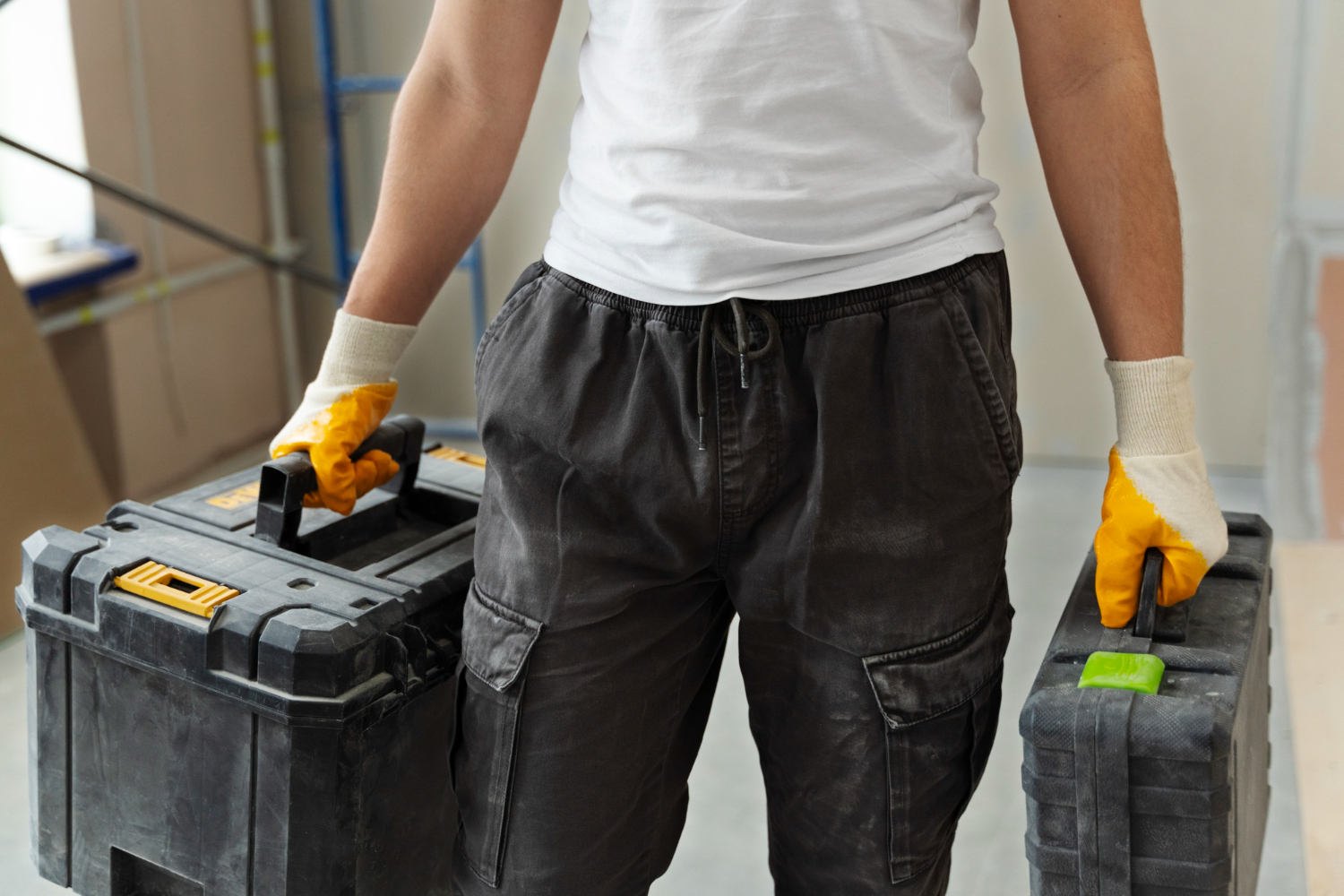
Equipment Removal and Final Documentation
When moisture readings across all affected materials have returned to acceptable baseline levels, typically defined as wood framing at or below 19% moisture content and building materials at levels consistent with surrounding unaffected areas, our technicians begin the equipment removal process.
Before any equipment leaves the property, our technician completes a final moisture map, documenting current readings at every point measured during the initial assessment. This final map, compared against the baseline, provides objective proof of drying completion and becomes part of the project documentation package delivered to the homeowner and their insurance company.
The final documentation package includes the initial assessment report, all moisture mapping data across every monitoring visit, photos of affected areas at every stage, a log of all equipment deployed, all products applied with their safety data sheets, and the final clearance readings. This documentation is the homeowner’s permanent record of the restoration work and is often required by insurance companies, future buyers during property transactions, and in some cases by local code enforcement.
We take documentation seriously because our clients’ trust in us does not end when the equipment leaves. It extends into every future conversation about their property’s history and condition.
What Our Technicians Wish Every Homeowner Knew
After years of responding to water emergencies across Central Florida, our team has accumulated a clear sense of what makes the difference between a fast, affordable recovery and a prolonged, expensive one. Here is what we wish every Orlando homeowner and property manager understood before disaster strikes.
Call us before you start cleaning up. The instinct to start mopping, moving furniture, and absorbing water with towels is completely understandable. But doing so before documenting the damage thoroughly can complicate your insurance claim. Take photos and video first. Then call us.
The source matters as much as the water. Stopping the flow of water is always the first physical priority, shut off the supply at the main valve or at the affected fixture’s shutoff. But the category of the water (clean, gray, or black) determines what your family should and should not be exposed to while waiting for our arrival. When in doubt, stay out of the affected area.
Hidden moisture is the real enemy. What you can see and feel is rarely the full extent of water migration. Professional moisture mapping reveals what is happening inside your walls, under your floors, and above your ceilings. Attempting to dry based on visible surface conditions alone almost always leaves hidden moisture that becomes mold.
Speed determines cost. The longer water sits in structural materials, the deeper it migrates, the more mold risk accumulates, and the more material eventually requires removal and replacement rather than drying in place. Every hour of delay between water intrusion and professional extraction meaningfully increases the scope and cost of the restoration.
Our Team Is Already on the Way
Whether it is a residential flooding emergency, a vacation rental disaster, or a commercial property event, our technicians are trained, equipped, and ready to respond at any hour. Our Orlando Water Clean Up & Restoration capability covers the full scope of water damage events, from Category 1 clean water to Category 3 contaminated flooding, with the professionalism, transparency, and eco-conscious approach that Central Florida families and property owners deserve.
We are not just a service you call in a crisis. We are the team that stays with you through every monitoring visit, every insurance conversation, every moisture reading, and every step of the recovery until your property is fully restored and documented.
Call us right now at (407) 800-9204. Our technicians are standing by 24 hours a day, 7 days a week. Visit goinggreenrestorationusa.com to learn more about our services or to request a free evaluation. When water damage strikes, every minute matters, and we are always ready to move.
Posted on Behalf of Going Green Restoration USA