 Spanish
Black Mold vs. Common Mold in Orlando Homes: When You Really Need Remediation
Not all mold is “black mold,” and not every dark spot means danger. In Orlando homes, most surface mold is common household mold you can often clean from small, non-porous areas yourself. Remediation becomes urgent when mold covers more than about 10 square feet, keeps returning, or is tied to hidden water damage. When in doubt, get a professional assessment.
Central Florida’s heat and humidity make mold one of the most persistent problems homeowners face. Understanding the difference between a cosmetic spot and a genuine health hazard helps you act calmly and correctly. Below, our IICRC-certified team explains what actually separates “black mold” from ordinary mold, and when it is time to call for help.
What Is the Difference Between Black Mold and Common Mold?
“Black mold” usually refers to Stachybotrys chartarum, a greenish-black mold that grows on cellulose-rich materials like drywall, wood, and ceiling tile that have stayed wet for days. Common household molds (such as Cladosporium, Aspergillus, and Penicillium) appear in many colors and are found in nearly every home in some amount.
Quotable fact: According to the U.S. Centers for Disease Control and Prevention, you cannot reliably identify a mold species or its toxicity by color alone, so treating all indoor mold growth as a problem to remove is safer than guessing.
The practical takeaway for Orlando homeowners is simple: the color matters less than the amount of mold, the material it is growing on, and the moisture feeding it. Learn more about our approach on our mold removal page.
How Quickly Can Mold Grow in Orlando’s Humidity?
Mold does not need a flood to take hold. It needs moisture, a food source, and time, and Central Florida supplies plenty of ambient humidity year-round. A slow plumbing leak, a sweating AC line, or a roof drip after a summer storm can quietly feed growth inside walls.
Quotable fact: The U.S. Environmental Protection Agency states that mold can begin growing on damp surfaces within 24 to 48 hours, which is why fast water cleanup is the single most effective form of mold prevention.
Because so many Orlando mold problems start with water intrusion, mold control and water damage response go hand in hand. If you have had a recent leak or flood, review our water damage restoration services to stop the source before mold spreads.
When Should Orlando Homeowners Call a Professional?
Small spots on hard, non-porous surfaces (like tile or glass) can often be cleaned with detergent and water. Professional remediation is warranted when growth is extensive, recurring, hidden, or tied to contaminated water.
Quotable fact: The EPA recommends hiring a professional when mold covers an area larger than roughly 10 square feet, or about a 3-by-3-foot patch.
Call a professional if you notice any of these:
- Mold covering a large area, or spreading across drywall, insulation, or subfloor
- A persistent musty odor with no visible source
- Mold that returns weeks after you clean it
- Water damage from sewage, flooding, or a long-term leak
- Household members with asthma, allergies, or weakened immune systems
Our team follows the industry’s recognized standard for mold remediation and will assess your home before recommending any work. You can reach us through our contact page.
Why Does DIY Mold Cleaning Often Fail?
Surface cleaning treats the symptom, not the cause. If the underlying moisture and any mold rooted inside porous materials remain, the growth comes back, sometimes worse and deeper than before.
Quotable fact: Professional remediation follows the ANSI/IICRC S520 Standard for mold remediation, which emphasizes correcting the moisture source and containing spores so they do not spread to clean areas during removal.
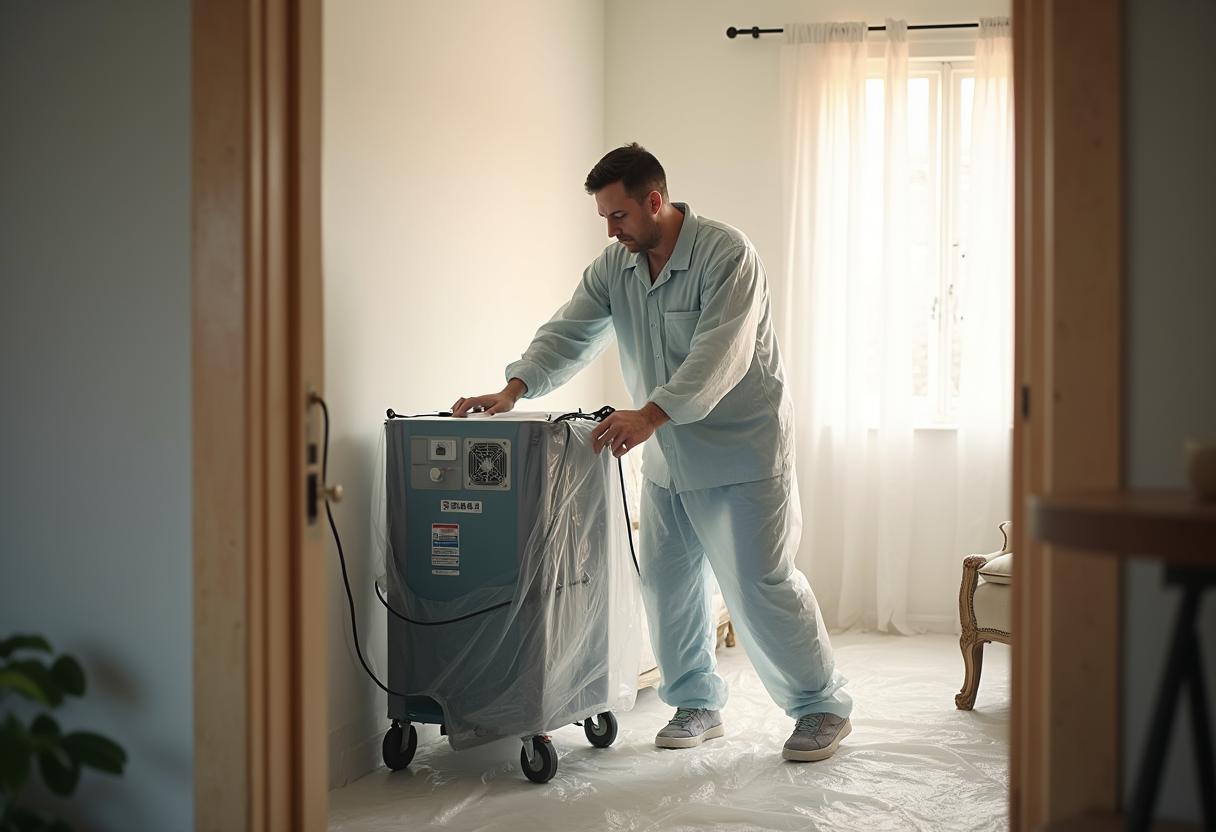
Do-it-yourself efforts also risk releasing spores into the air without proper containment or protective equipment. A trained crew isolates the work area, uses negative air pressure and filtration, removes unsalvageable materials, and verifies the space is dry before reconstruction. When rebuilding is needed, our reconstruction services restore your home in one coordinated process.
What Makes Eco-Friendly Mold Removal Different?
Traditional mold work can rely on harsh chemicals that leave strong residues behind, which is a concern for families, pets, and people with respiratory sensitivities. Green remediation focuses on moisture control, proper removal, and lower-toxicity products.
Quotable fact: The most important step in mold removal is not applying a product at all, it is drying the structure completely, because mold cannot regrow on materials kept below the moisture threshold it needs to survive.
As a veteran-owned company built around sustainable methods, we prioritize eco-friendly products and thorough moisture control so your indoor air is not traded for a quick fix. You can read more about our story and certifications on our About Us page.
Frequently Asked Questions
Is all black-colored mold dangerous?
No. Color alone does not confirm the species or its risk. The CDC advises treating any significant indoor mold growth as something to remove, regardless of color, rather than trying to identify danger by appearance.
How do I know if mold is hidden in my walls?
Common signs include a musty smell, unexplained allergy symptoms indoors, warped or discolored drywall, and a history of leaks or flooding. A professional inspection with moisture meters can confirm hidden growth.
Can I just paint over mold?
No. Painting over mold traps it temporarily but does not kill it or remove the moisture feeding it. The mold will continue to grow and eventually bleed through the paint.
How long does mold remediation take in an Orlando home?
It depends on the size and location of the growth. Small, contained jobs may take a day or two, while larger projects involving hidden damage and reconstruction take longer. We provide a timeline after assessing your home.
Does homeowners insurance cover mold removal in Florida?
Coverage varies. Mold caused by a sudden, covered event (like a burst pipe) is more likely to be covered than mold from long-term neglect. Review your policy and document everything.
How can I prevent mold from coming back?
Control indoor humidity, fix leaks quickly, run exhaust fans, maintain your AC, and address any water intrusion within 24 to 48 hours. Prevention is far cheaper than remediation.
Is professional mold removal worth the cost?
When mold is extensive or recurring, yes. Professionals correct the moisture source, contain spores, and verify drying, which prevents the repeated costs of failed DIY attempts.
Posted on Behalf of Going Green Restoration USA